Articles
The dichotomy between physical and human infrastructure: another look at the End SARS protests and destruction of public assets
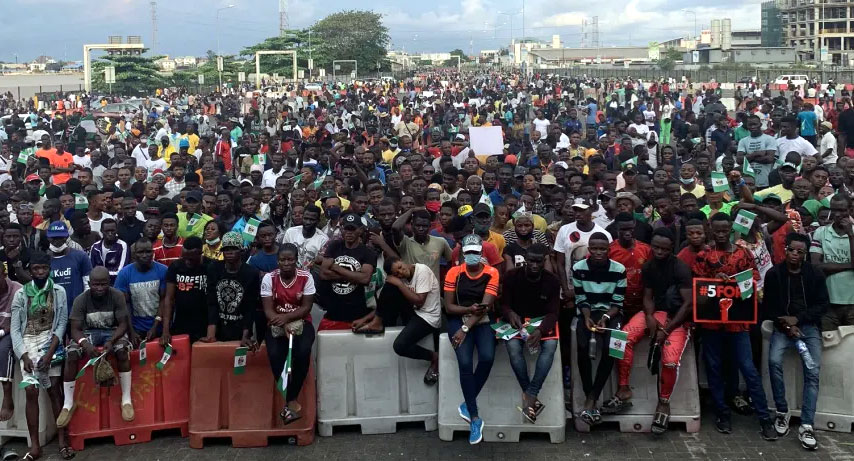
There are glaring weaknesses in Nigeria’s governance and social structure. With the testimonies and evidence making the rounds in the past couple of year, it is clear that the Nigerian youth had a legitimate cause protesting against police brutality. The largely peaceful and orderly protests nationwide show that our young citizens have come of age and deserve and have earned the opportunity to be major stakeholders in building a new Nigeria of our dreams. On the topic of nation-building, infrastructure has a great role to play in that regard. Now, we must recognize that infrastructure is basically of two kinds, namely: human infrastructure and physical infrastructure. Sadly, the hijacking of the #endSARS protests by jobless and irate youths led to the reckless destruction of public infrastructure in major cities across Nigeria. Two choices confront our youth: they will come to our window, either to fix it or break into it.
This could have been avoided, considering the fact that the anger and frustration of Nigeria’s youth population have been tethering on the edge for so long and was only waiting for an opportunity to reach a boiling point. Over the years, we failed as a nation to leverage this strategic human asset which has now snowballed into the current crisis. Some official estimates suggest that it will require at least three trillion naira to rebuild the physical infrastructure destroyed, vandalized or burnt down. This is a huge setback from an economic perspective. “You and I come by road or rail,” said former British Prime Minister, Margaret Thatcher, “but economists travel on infrastructure.” The point is that our prosperity as a nation depends on infrastructure – both human and physical. For every building destroyed, some businesses would close, more jobs would disappear, more tax revenues which should have been used to expand already grossly inadequate public infrastructure would now be diverted into rebuilding damaged ones.
The events of the past three weeks have brought back to the fore the urgent need to prize and prioritize public infrastructure. And closely connected to that, we also need to develop our human infrastructure too. An adage says, if we refuse to build a child’s useful capacity, he will end up to destroying the building we have erected. As a nation, we must put measures in place to develop and protect both our human and physical infrastructure at all times, especially in times of social unrest.”
From the point of view of asset management, we need a reorientation of our citizens to understand that public buildings and other assets, including vehicles, street furniture and other public utilities do not belong to politicians. Public infrastructure belongs to all of us. A broken road affects all of us, not just political officeholders. Politicians are not the ones who ride on public buses to work. We, the citizens are the one who needs the buses to move about more cheaply. When people destroy or burn down police stations so that security personnel have no offices to operate from, we the people are more vulnerable; the political class have access to security.
Let’s take a deeper look at some of the impacts of the destruction of public infrastructure on our national productivity: The destruction of our courthouses and the judicial documents will further impede an already slow and inefficient judicial process.
With the statewide curfew being eased, people have begun commuting to work, the terrible effect of burning over 150 buses was brought home as thousands of commuters waited for hours at BRT bus stations across Lagos state. Lagos needs at least 1,000 additional buses to ease public transportation, the loss of plus 150 of the existing ones which are grossly inadequate means not only more hardship for commuters but lesser productivity at work as people arrive late or not at all.
In a number of locations, hoodlums vandalized the electrical network of distribution companies (Discos). It goes without saying that power supply to those areas would be seriously affected. Budgeted funds which should be used to strengthen the currently weak and inadequate infrastructure will now go into rectifying the damaged network at greater cost and more delays. Ironically, some of those who participated in the vandalism complain that they don’t have an adequate power supply. What about the damage to fire stations and how that potentially impact citizens when such services are critically needed?
All this ruckus further reinforces the maintenance cultured campaign that we must digitize our management of public assets and not rely solely on archaic and easily manipulated paper records. Beyond reorientation of our citizens to the preservation of public infrastructure, we need to engage our youth in our public asset maintenance culture. The strident complaints about increasing unemployment among Nigeria’s youth population can to a large extent tackled by focusing seriously on infrastructure. Michael Bloomberg put it very clearly by saying “We can only create good jobs if we make a smarter investment in infrastructure.”
Investment in upskilling our youth cannot be overemphasized and we as a society have to find ways to bridge the yawning gap between human and physical infrastructure to make meaningful progress. The expansive asset management space offers a great opportunity to do just that. If the enabling environment is created, the Nigeria youth, regardless of their skill level, can fit into a very wide range of jobs in the value chain. Data and information management is an area our teeming technology-savvy youth can unleash their talents. There is also the professional cadre where engineers, architects, builders etc can find useful employment. Others can be trained and deployed as artisans to work in maintenance, repair and refurbishment.
There is a great opportunity for Job creation through the formation of a localized maintenance ecosystem/economy – an opportunity to plough the energies of local youth towards the maintenance of Public Assets within their vicinity. The components of the asset management value chain; from our youth demographic can be plugged into – from data collection & digitization to other functions such as implementation, where skilled labour can develop, repair and refurbish infrastructure assets, energy and water management, building services and operations, health, safety and hygiene and housekeeping. Thousands of our youth can be absorbed into this sector which will have a tremendous impact in decreasing the spiralling unemployment rate, encourage ownership & collective protection of public assets and instil in our citizens the idea that government property is our collective heritage and we all must do what we can to protect and sustain them.There is a great opportunity for Job creation through the formation of a localized maintenance ecosystem/economy – an opportunity to plough the energies of local youth towards the maintenance of Public Assets within their vicinity. The components of the asset management value chain; from our youth demographic can be plugged into – from data collection & digitization to other functions such as implementation, where skilled labour can develop, repair and refurbish infrastructure assets, energy and water management, building services and operations, health, safety and hygiene and housekeeping. Thousands of our youth can be absorbed into this sector which will have a tremendous impact in decreasing the spiralling unemployment rate, encourage ownership & collective protection of public assets and instil in our citizens the idea that government property is our collective heritage and we all must do what we can to protect and sustain them.
By
Oladeji Williams
MD/CEO Infrastructure Management Express
Recent News and Events